Brakes
Basic hydraulic braking system built with redundancy to promote safety
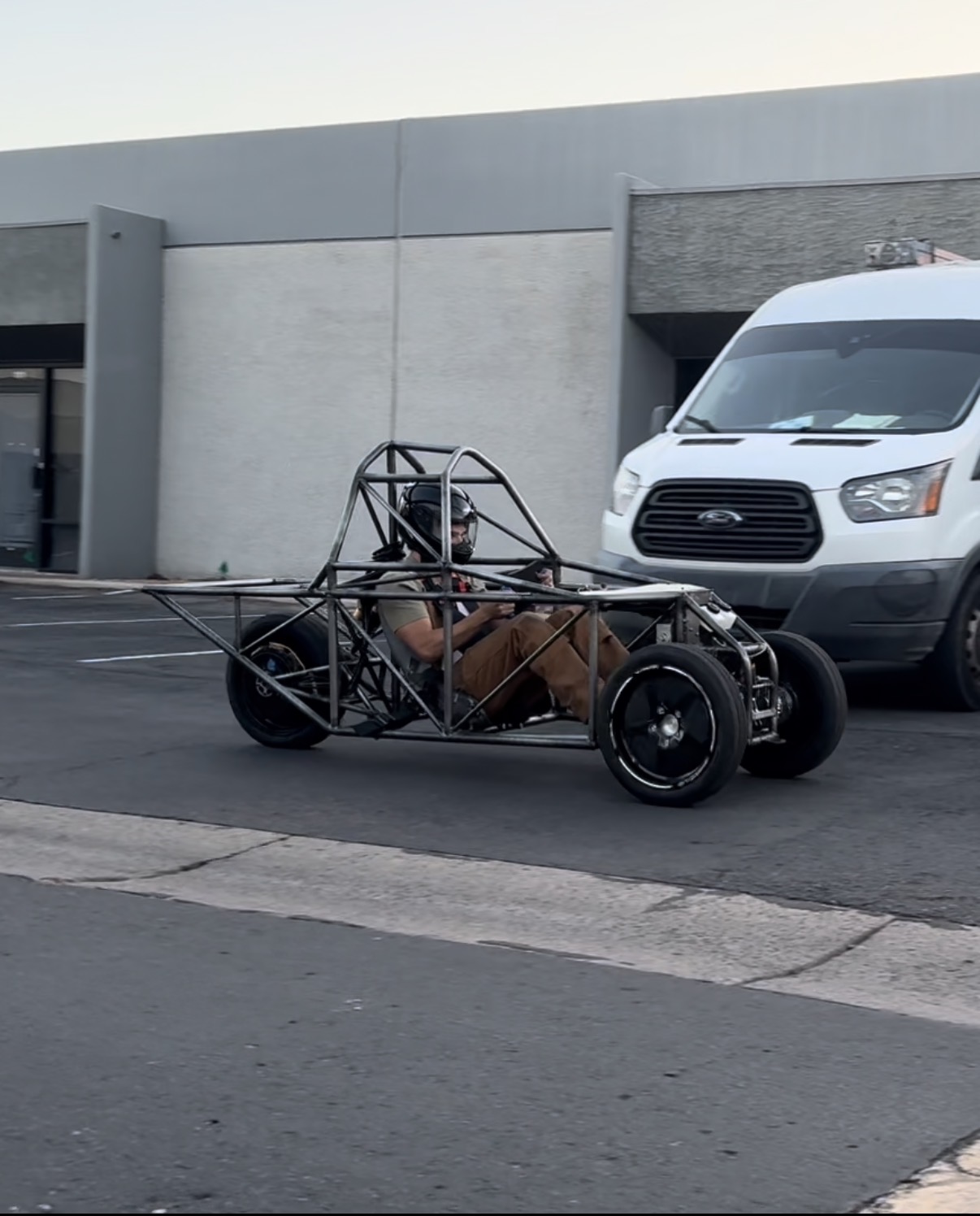
Brembo brake caliper installed on the upright and connected to the brake lines
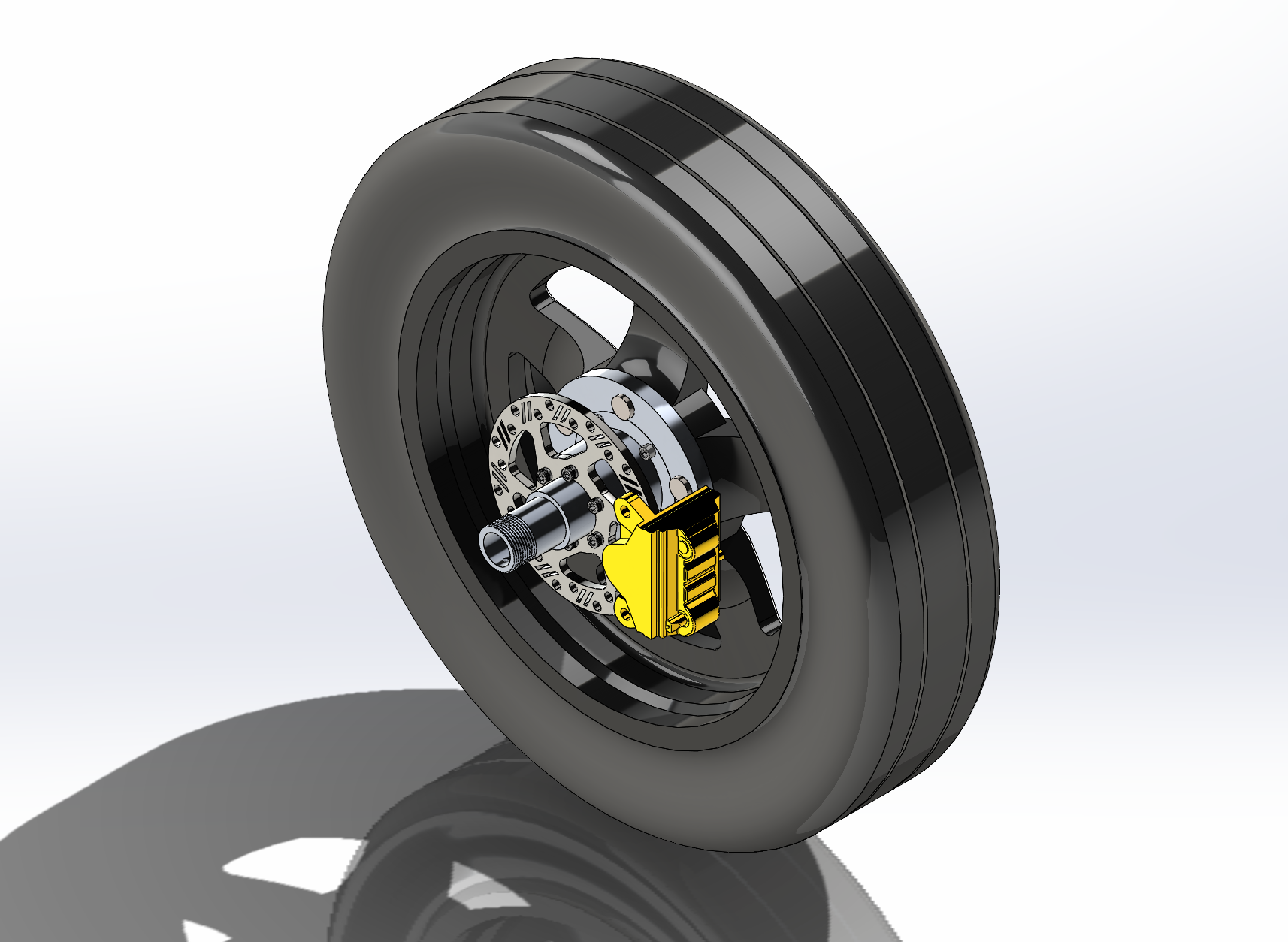
SolidWorks assembly CAD model of the caliper and brake rotor
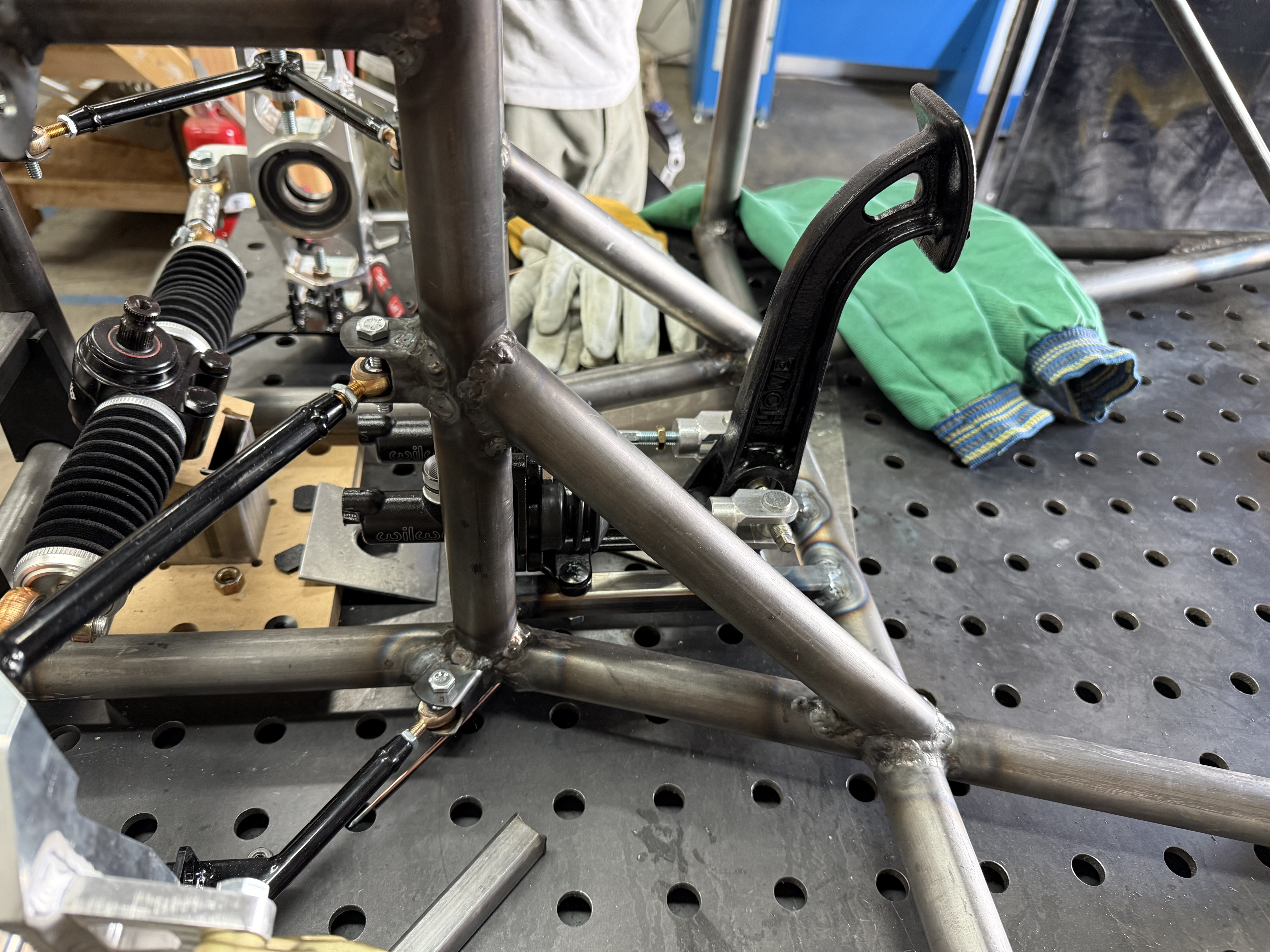
Brake pedal and mount assembly
Overview
The main point of emphasis for this braking system is guaranteed stopping power, rather than performance. Due to the nature of the American Solar Challenge, the objective for the brakes is reliability and efficiency. We tried to implement this in the simplest fashion possible with a brake pedal that is connected to two independent master cylinders. With this set up, one master cylinder can fail completely and the car will still have braking force applied to both the front and rear wheels, which is required in the competition. Funnily enough, even though the objective was not performance in the design of this system, we were fortunate to be gifted some second-hand Brembo brake calipers from ASU's Formula SAE team. On top of the reliability the redundant system provides, we can be confident that they also have the stopping power that Formula SAE cars have as well. Our brake rotors were custom designed and laser-cut out of 4130 chromoly steel, in an effort to have a durable and stiff surface for the calipers to clamp onto. The rotor design was iterated upon using Ansys to maximize heat dissipation on the hardest braking loads.
Process
- Created a brake line schematic that complies with American Solar Challenge regulations
- Selected master cylinder and brake line components based on calculations of car's resulting weight and max speed
- Designed and validated brake rotor models that were compatible with the given Brembo brake calipers
- Assembled system with proper hardware
Tools
Skills
Outcomes and Results
By implementing two independent master cylinders in a hydraulic system connected to a brake pedal, the team and I were able to successfully create a mechanism that stops the solar car and complies with the American Solar Challenge regulations. There are plans to enhance the set up by making the brake pedal assembly more compact. To minimize weight, the cockpit of the solar car is on the smaller side, and the brake pedal that was purchased should be slightly minimized as a result of this. I believe that this could be a good project, as it could be a potentially good exercise on designing a part in CAD and getting it machined professionally at school, communicating with the CNC techs. Personally, I think that the more parts of the car that are custom-made, the better as it keeps the team well rounded in all aspects of design, and understanding the nuances of product implementation that buying something off the shelf does not provide. Additionally, we receive a system that is better catered to the car's geometry. As the car continues to be added onto in 2025, the brakes will continually be tested for failure.
Reflection
Reflecting on the making of this system, I feel very fortunate to have been given brake calipers by our fellow collegiate competition team Formula SAE. It reminds me of how important communication can be and that it is okay to ask for help. Obviously, this isn't the right practice in many cases (giving project advice to a direct competitor), but in this case because we are two different scopes of motor sport, there was no harm in doing so. As I enter the twilight of my time on the solar car team, I want to carry on the generous giving of knowledge to other up and coming student engineering organizations that may need it. After aiding in assembling this system, I learned a great deal of knowledge about the mechanical concepts that accompany braking systems and what needs to be considered in their design and how to allow for adjustability.